Orphism

.
Orphism  -  among the roots of the Symbolist movement orphism@europe.com
Orphism could be defined as the creative expression of Greek mythology with the Orpheus legend at its centre.*  This legend originated in the sixth century BC.  It has through the ages and till today exerted a considerable influence on Western culture.

Virgil, Ovid, artists of early Christianity, Dante, Renaissance painters, Shakespeare, Dryden, Händel and the finest artists of the 19th and 20th centuries have all been inspired by the myth portraying Orpheus, son of Apollo as the greatest musician and poet of antiquity and inventor or master of the lyre.  Their work reflects the genius and power of Orpheus;  the symbols of the lyre, laurels, the nightingale and the uprooted tree;  and the tragedy of Orpheus and Eurydice.

Orphism.eu is researched and published by Icons of Europe


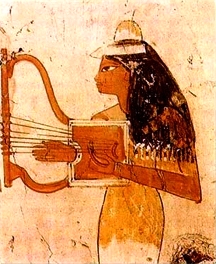
The lyre was also used
in Ancient Egypt
(three millennia BC)


OVID

"And list'ning trees their rooted stations leave;
Themselves transplanting, all around they grow,
And various shades their various kinds bestow.
Here, tall Chaonian oaks their branches spread,
While weeping poplars there erect their head."

Metamorphoses, Book X
The Story of Orpheus and Eurydice
by the Roman poet Ovid (born 43 BC)

DRYDEN / HÄNDEL

"Orpheus could lead the savage race;
And trees unrooted left their place;
Sequacious of the lyre:
But bright Cecilia rais'd the wonder high'r;
When to her organ, vocal breath was giv'n,
An angel heard, and straight appear'd
Mistaking earth for Heav'n."

A Song for St. Cecilia's Day (stanza 7) by John Dryden (1631-1700), for which
Händel (1685-1759) wrote the music.  Chopin said about Händel's Ode to St. Cecilia:
"... nearer to the ideal that I have formed of great music" (20 September 1828).


* Formulation proposed by Icons of Europe. -
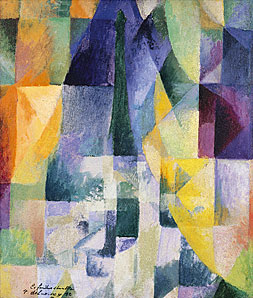
 The Guggenheim Museum notes that the poet Guillaume Apollinaire (1880-1918) applied the French term 'Orphisme' in 1912 to the works of a group of contemporary painters.  They "painted according to a system of 'colour harmonies'  that equated hues to musical pitches.  The term Orphic Cubism is sometimes used instead of Orphism". - Since the Orpheus mythology has been revived many times in the past, however, 'Orphism' could be applied to much wider school-of-art concepts and cultural movements as formulated above by Icons of Europe.
Robert Delaunay, "Simultaneous Windows", 1912
Oil on canvas, 21 5/8 x 18 1/4 inches
Solomon R. Guggenheim Museum
Example of Apollinaire's idea of Orphisme

Back to the top